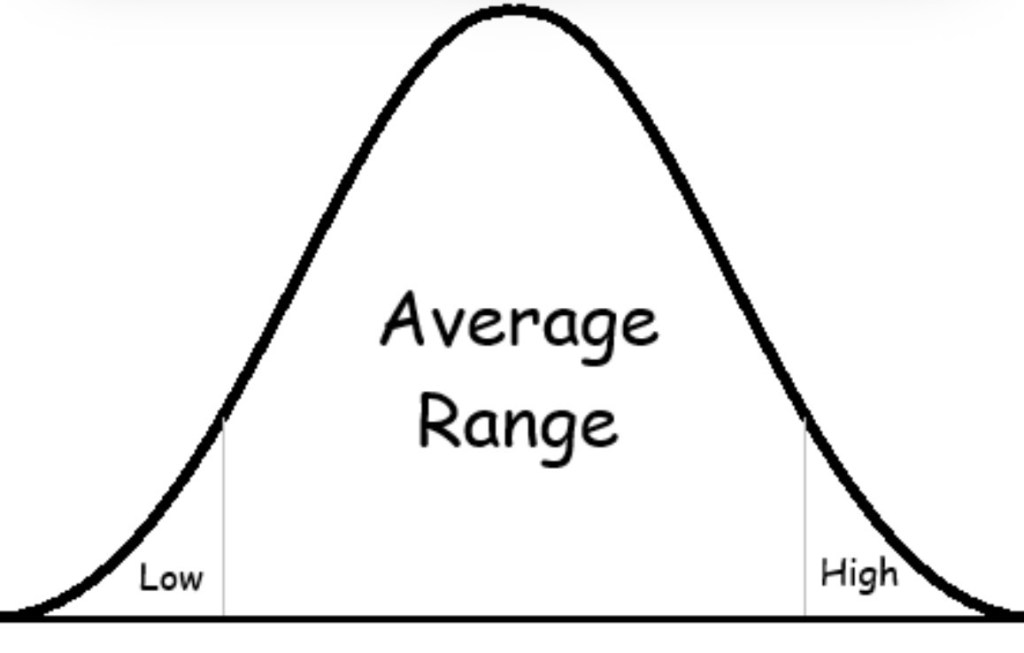
Each process is subject to the ‘bell curve’ effect – some children will find it easy, most ok, but some will find it difficult and time consuming. This matters…
In some cases, being good at one process seems to predispose children to being good at another – sadly, this is true for the reverse.
Let us consider the writing of one simple two-letter word – ‘it’.
Start writing!
The clock is ticking. The amount that can be held and used in ‘working memory’ is finite and can be affected by different types (e.g. visual and auditory) working together efficiently – bell curve applies here too. Quicker working brings advantages.
Need to know:
- What sounds are in the word
- What order
- What representation of ‘i’ is needed
- How to manipulate a pen/pencil to make the desired mark – it is an extension from the body that only gives indirect sensory information
Need to have spatial awareness to guide the pen to make the desired marks in the desired place, including:
- Starting at the correct position – normally at a place above a line that needs to be carefully judged in relation to other lines and other letters – including the correct distance from the previous word
- Efficient letter formation
- The ability to make straight and curved lines in the desired order and direction based on the above
- The ability to ensure that the marks they make touch the line in the right place(s)
- The ’correct’ amount of pressure to make the marks at a quick enough rate
Need to review the letter, once written, to ensure it is the correct size and orientation.
Need to quickly recall what the next letter is (‘t’) and then go through the same steps as for the first letter (‘i’)
As skills are learned to automaticity, they take less processing time and effort, reducing cognitive load. Over time, they will be combined into different schemas: for example, all the different steps for writing each part of a letter eventually combine so that a child can write it without having to consciously go through each step.
Eventually, for the majority of the population all the schemas combine so that writing the whole word is done automatically. However, until this is the case, a child having to work through all the different steps is working FAR harder than someone who has achieved automaticity.
Now add in the number of steps and time taken to go through them, and consider that a good adult working memory can work with about six items in a thirty second time span.
Next consider the motivating/demotivating effect of struggling to remember all the things needed to write the word while others write it quickly and move on – and then YOU are told that you need to ‘work harder’!
Ring any bells about anyone you know? Is it any wonder some children hate writing?
Mike
Please like 👍 and share this post with your friends.
To contact me regarding this post, or purchasing/performing/commissioning music for any occasion, please email me at
contact@mikestubbscomposer.com


One thought on “To Write The Word ‘It’”